Unveiling the USSR’s Cold‑War Secret Machines: Design, Purpose, and Legacy
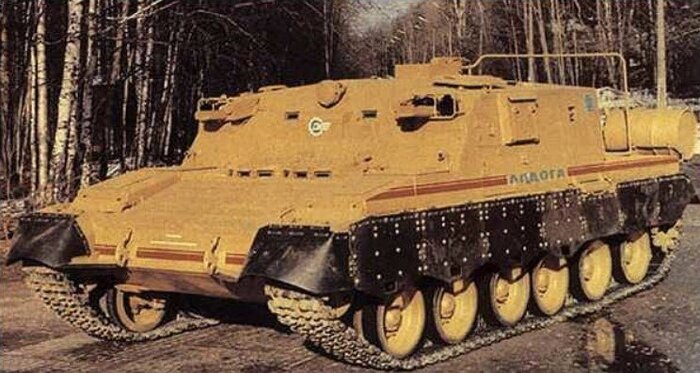
The Soviet Union invested heavily in a fleet of concealed “secret machines” during the 1950s and 1960s—self‑contained command centers, armored shelters, and mobile units designed to survive a nuclear strike and preserve state control. Though most details remain classified or only recently declassified, the surviving schematics and photographs reveal a complex strategy aimed at ensuring continuity of governance in the event of a catastrophic attack.
What were these secret machines and how did they function?
Unlike conventional military hardware, these units were built to be clandestine, mobile, and self‑sufficient. They included underground bunkers that could be rapidly flooded, armored command vehicles capable of traversing rugged terrain, and even floating platforms that could be deployed in the Baltic Sea. Each unit carried redundant power supplies, communications gear, and living quarters, allowing a small cadre of officials to operate independently for months.
Who decided that such measures were necessary, and why?
In the wake of the 1953 Stalin era and the early Soviet nuclear tests, the leadership feared that a first‑strike by the United States would collapse the central command structure. The doctrine of “permanent readiness” emerged: if a city was destroyed, the state could still coordinate a response from a hidden location. Senior officials, including the then‑Chairman of the Soviet Council of Ministers, pushed for a network of these machines to be dispersed across strategic points.
Which technologies were most critical to their survival?
Key components included:
- Redundant communications: Far‑inertial and line‑of‑sight radio arrays that could bypass damaged infrastructure.
- Self‑contained life support: Filtration systems capable of purifying air and water for six months.
- Mobile power units: Heavy diesel generators coupled with diesel‑electric hybrids to reduce the need for fuel resupply.
- Armored hulls: Composite materials that could absorb blast waves from a radius of 10 kilometers.
How were these machines concealed and protected?
Strategic placement was paramount. Many units were hidden beneath civilian structures, in abandoned mines, or buried deep underground. The Soviet engineers employed deceptive architectural features—fake entrances, false corridors, and camouflaged access points—to deter detection by aerial reconnaissance. Moreover, the units’ exterior surfaces were treated with “chameleon paint” that reflected the surrounding terrain, making them nearly invisible from the air.
What are the implications for today’s civil‑military planners?
The Soviet approach offers several lessons:
- Redundancy is vital: Modern planners must ensure multiple, independent lines of communication to survive infrastructure losses.
- Mobility enhances survivability: Deployable command centers can reduce the risk of a single point of failure.
- Secrecy requires layered security: Combining physical concealment with cyber‑security measures is essential against modern reconnaissance.
- Interoperability matters: Equipment across units should share standardized protocols to allow rapid integration during an emergency.
What cautions should be considered when evaluating historical secrecy programs?
Despite the impressive engineering, many details remain unverified. Some documents were destroyed or altered, and eyewitness accounts vary. Researchers should treat available data with skepticism, cross‑referencing independent archives and declassified intelligence reports. Additionally, the secrecy of these projects often meant that safety standards were compromised, raising questions about the long‑term viability of such units.
Can the legacy of these machines inform future resilience initiatives?
Yes—modern governments can adapt the principles of redundancy, concealment, and mobile command centers to current threats, such as cyber‑attacks and asymmetric warfare. By integrating advanced sensors, satellite links, and autonomous support systems, future “secret machines” could provide robust command and control in a world where infrastructure is increasingly digitized and vulnerable. However, policymakers must balance secrecy with transparency to maintain public trust and ensure accountability.
Секретные машины СССР на случай ядерной войны - 15.03.24 23:13 | Пикабу
Секретные машины СССР на случай ядерной войны - 15.03.24 23:13 | Пикабу